Expanded home guarantee + Brokers hit new high + Sellers enjoy record profits

The First Home Guarantee has been expanded as of 1 October. It now includes unlimited places, no income restrictions and higher property price caps. That means more first home buyers can enter the market with a 5% deposit and avoid lender’s mortgage insurance.

New research from Cotality explores whether it makes financial sense to buy sooner with a smaller deposit, or wait longer to save the full 20%.

The catch with a 5% deposit is that you borrow more – and pay more interest over time. But that cost may be outweighed by the savings from escaping the rental market earlier.

Since 2020, national rents have increased by $200 per week, or more than $10,000 per year.

That adds up. In Sydney, for example, using the scheme could mean buying 12 years earlier and saving $502,000 in rent.

The scheme won’t suit everyone, but for renters in expensive markets, it could open the door to ownership sooner, with big long-term savings.

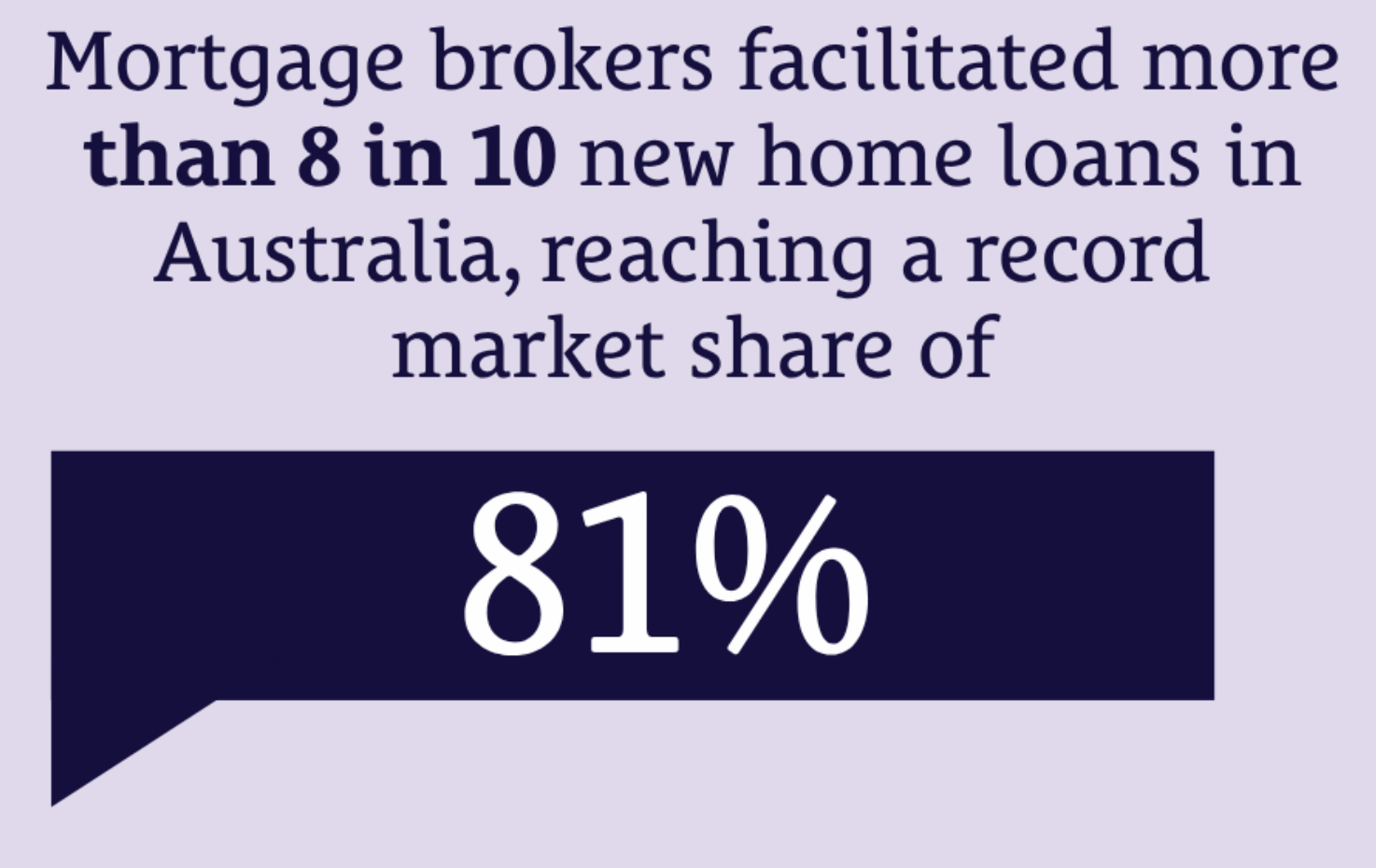
Broker market share climbs to record 77.6%

The mortgage broker channel continues to dominate the Australian home loan market.

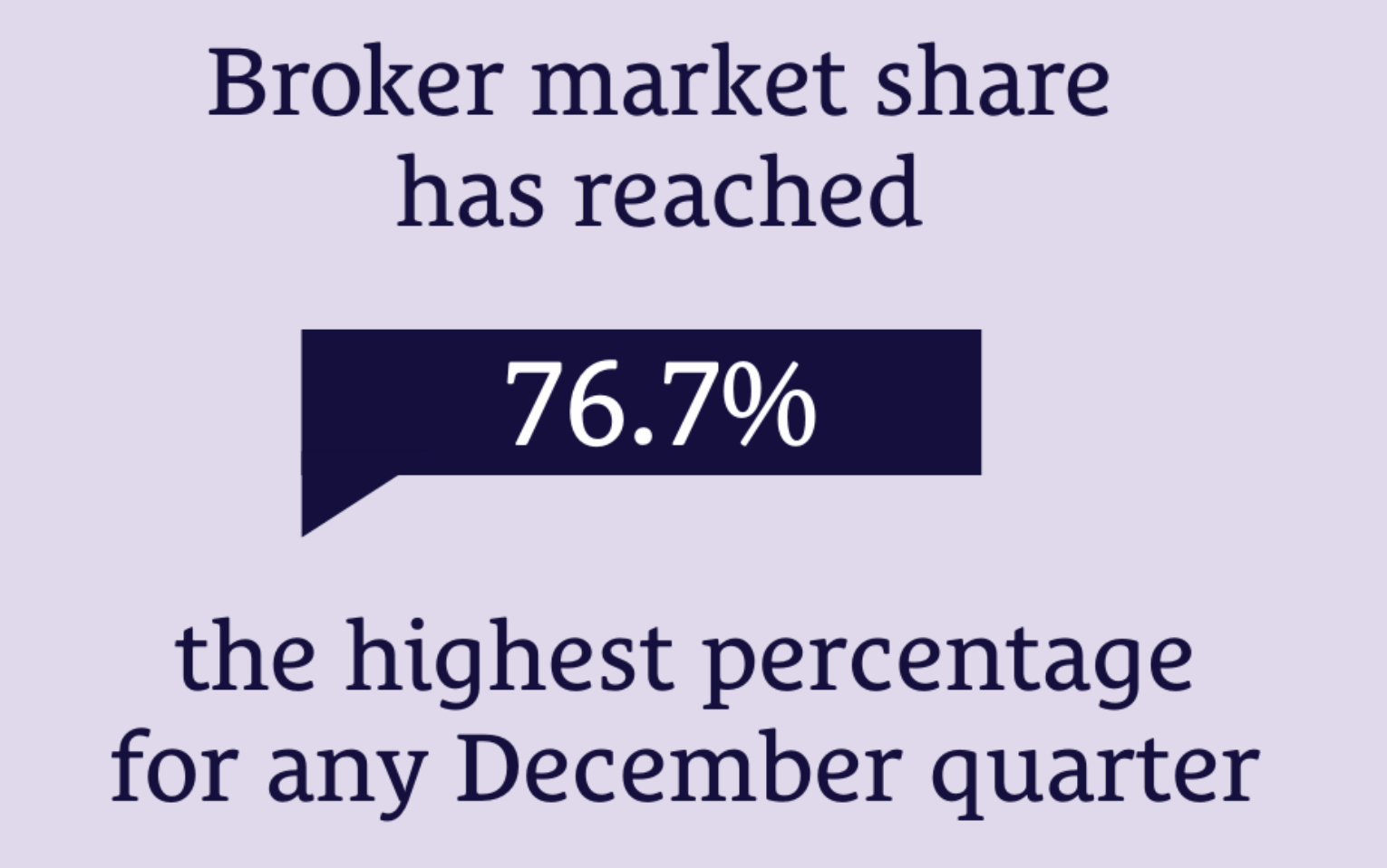
Brokers facilitated 77.6% of all new residential loans in the June 2025 quarter – the highest share on record, according to data from Cotality for the Mortgage & Finance Association of Australia (MFAA).

Market share has now risen by more than 10 percentage points in just two years. In June 2023, broker share sat at 67.2%.

The value of new loans facilitated by brokers also rose to $121.58 billion, a 21.46% jump from a year earlier and a 31.3% lift on June 2023.

MFAA CEO Anja Pannek said the figures show Australians continue to choose brokers for guidance and support. “This result continues to reflect Australians’ clear choice to work with their mortgage broker as they navigate their home financing journey.”

Sellers bank record profits despite small rise in losses

It was another strong quarter for property sellers, with the latest Pain & Gain report from Cotality revealing $36.6 billion in resale profits during the three months to June.

Nationally, 94.8% of resales made a nominal gain, down slightly from 95% in the March quarter but still well above the 10-year average of 91.5%. The median profit hit a record high of $315,000.

Loss-making sales rose modestly to 5.2% of resales, with nearly 60% of those losses concentrated in Sydney and Melbourne units. Darwin also recorded a high share of loss-making sales at 20.6%.

By contrast, Brisbane was the best-performing capital city, with 99.7% of resales turning a profit and median gains reaching $400,000. Regional sellers also outperformed the capitals, with 96.4% of sales in the black.

The numbers highlight the continued strength of the market – particularly for long-term owners – even as patchier results emerge in some segments.

Westpac upgrades outlook + Construction gap narrows + Stamp duty outpaces wages

Westpac has updated its property forecast ahead of the spring selling season, and it’s good news for Melbourne homeowners.

Nationally, Westpac expects 6% growth this year and 9% next year. That’s double what it predicted back in May. Melbourne is tipped to lead the charge with 10% growth in 2026, the highest of all capitals.

The bank says interest rate cuts have lifted sentiment, while the number of homes for sale has dropped to just 2.5 months’ worth of supply, well below the usual 3.5 months.

Another key driver is the rise in cash buyers. More retirees are using super to purchase property outright, while growing intergenerational support from the “Bank of Mum and Dad” is helping younger buyers into the market.

Although building approvals are starting to rise – particularly in higher-density housing – Westpac says a meaningful increase in completed homes won’t arrive until late 2026.

In the meantime, demand is likely to keep outpacing supply, giving sellers the advantage.

Buying still cheaper than building, but gap is narrowing

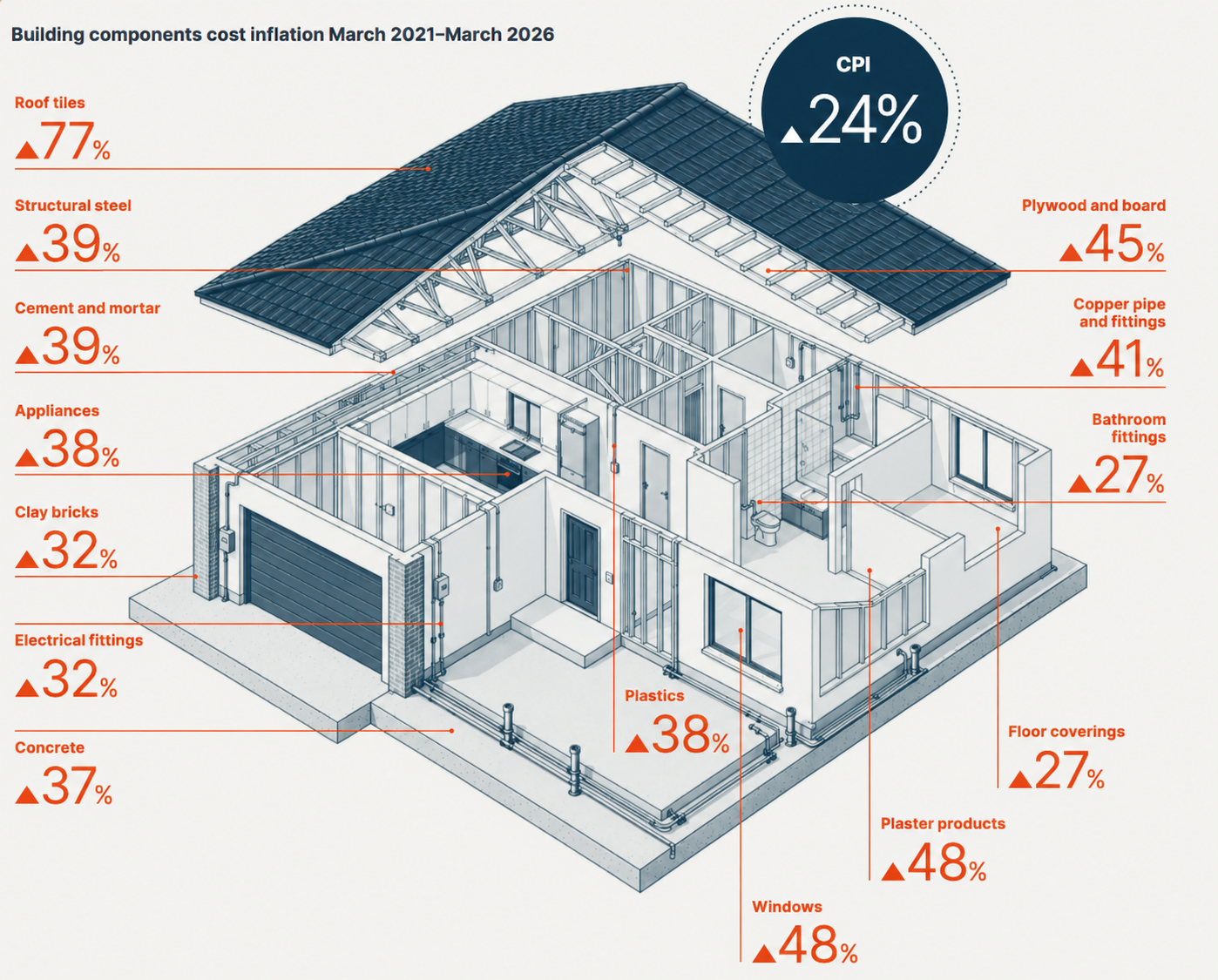
Construction cost inflation is finally slowing – and in some cities, house price growth has caught up. This, in turn, is shifting the buy-vs-build equation.

According to Ray White chief economist Nerida Conisbee, construction costs and house prices are now tracking much closer together. Between 2021 and mid-2025, national construction costs rose 35%, while capital city house prices climbed 32%. That 2.3-point gap is down sharply from 16 points in December 2023.

In Perth and Adelaide, house price growth has actually surpassed construction costs, encouraging new development and strengthening the housing pipeline.

But in Melbourne, the story remains difficult. House prices have risen just 4% over four years, compared to a 25% jump in construction costs. That makes building far less viable, a challenge that’s also playing out in Sydney and Canberra

Stamp duty costs outpace incomes

Today’s buyers face stamp duty costs that are up to three times heavier relative to income than those of 25 years ago, according to Domain.

Domain’s research found that, in Sydney, the stamp duty on a median-priced house was equal to 44.5% of income in 2000. By 2024, it had risen to 119.7%. Melbourne’s share grew from 36.5% to 109.3%, while Brisbane lifted from 19.5% to 66.3%.

Overall, stamp duty has grown 2.7 times faster than wages in Sydney, three times faster in Melbourne and 3.4 times faster in Brisbane. 

Domain said that much of the increase is linked to soaring property prices. However, stamp duty thresholds have barely shifted during the same period. This, in turn, has created “bracket creep”, where buyers of even modest homes were paying at rates originally designed for more expensive properties. That structural shift has magnified the burden across the market.

While the burden has grown sharply, there are some relief measures in place. For instance, stamp duty concessions and exemptions are available for eligible first home buyers, although these differ from state to state.

KPMG lifts outlook + Smaller cities lead growth + Approvals surge

National house prices are set to climb faster than expected this year, with KPMG upgrading its 2025 forecast to 4.9% growth, up from 3.3%, after interest rate cuts boosted buyer sentiment and activity.

Adelaide and Darwin are tipped to lead the pack, each with 7% house price growth, followed by Perth, Sydney and Melbourne (5%). Brisbane is forecast at 4%, Hobart at 2% and Canberra at just 1%.

Unit prices are expected to rise faster in many markets, with Brisbane units set for a standout 7% gain, and Darwin units topping the list at 8%, as affordability pressures push more buyers towards smaller dwellings.

In 2026, national growth is expected to ease to 4.5% as supply improves, population growth stabilises and affordability constraints weigh on demand. 

However, completions are expected to average just 160,000 new dwellings annually over the next two years – 30% below the level needed to meet national housing targets – meaning supply constraints will continue to underpin prices.

Smaller cities deliver bigger gains over two decades

Adelaide and Hobart have outpaced Sydney and Melbourne for house price growth over the past 20 years, according to a new valuation report from the Australian Property Institute.

Between 2005 and 2024, Adelaide’s median house prices soared 175.1%, just ahead of Hobart at 171.9%. Sydney (170.9%), Brisbane (169.4%) and Melbourne (169.2%) followed close behind, but the results challenge long-held assumptions about where the best investment returns lie.

For units, Hobart again led the way with 133.5% growth, followed by Adelaide (128.9%) and Melbourne (109.1%). Sydney and Brisbane underperformed the national average. 

The report said that the smaller capital cities are increasingly outperforming their bigger cousins, despite drawing fewer migrants. While Sydney and Melbourne attracted the bulk of new arrivals, their housing markets delivered slightly lower returns.

These results suggest other forces, like affordability, supply constraints and lifestyle shifts, may have a bigger influence on long-term capital growth than migration alone.

Approvals hit 22-month high in June

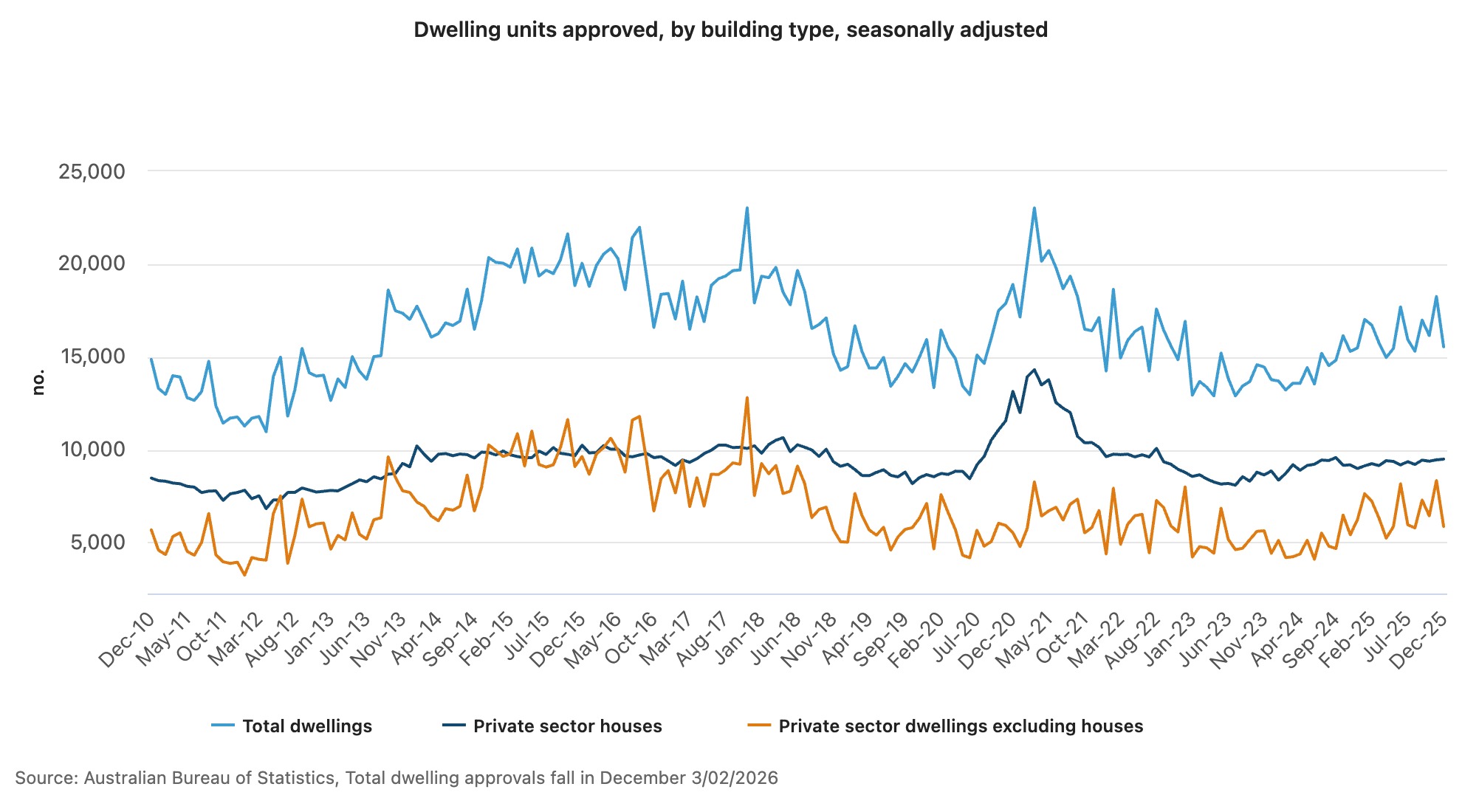
June’s building approvals data delivered good news for housing supply with numbers up 11.9% to 17,076 dwellings, the strongest monthly result in nearly two years, according to the Australian Bureau of Statistics.

The spike was largely due to a 33.1% increase in multi-unit approvals, while house approvals dipped slightly (-2.0%) for the month. 

Over the full 2024/25 financial year, 187,330 dwellings were approved, 13.9% more than the previous year. Multi-unit approvals rose 27.9% over the year, while detached house approvals grew 6.1%.

While the turnaround is welcome, the Housing Industry Association (HIA) cautioned that these figures still fall short of the 240,000 approvals per year needed to meet the federal government’s housing targets.

“Multi-unit activity, in particular, needs to do more heavy lifting. Multi-unit commencements need to double from current levels in order to achieve the government’s housing targets,” HIA Senior Economist Tom Devitt said. 

“This is unlikely to occur under current policies. Labour and land shortages, obstructionist regulations and punitive surcharges on institutional investors have pushed improving sentiment away from apartments back into the detached housing sector.”

Buy vs rent + Borrowers keep repayments high + Domain tips growth

New data from Domain shows that while it’s still cheaper to rent in most parts of Australia, that may not be the case for long, especially for unit buyers and those eyeing regional areas..

Right now, only 6.0% of suburbs across the country offer cheaper mortgage repayments than rent for houses. But the picture is far more favourable for units: 22.8% of suburbs nationally, and a huge 31.3% in regional areas, make more financial sense to buy in than rent.

Perth leads the way in affordability. A remarkable 82.9% of its unit suburbs favour buyers, far ahead of Brisbane (7.9%) and Sydney (9.5%).

The report assumes a 20% deposit and an interest rate of 5.68%. But with two rate cuts already delivered in 2025 and further expected, Domain says more suburbs could soon tip in favour of buying.

Domain expects the biggest gains to be in unit-heavy capital city areas and regional towns, where mortgage costs are already close to rent. 

However, this growing affordability may also bring a wave of buyer demand and renewed price growth.

Most borrowers sticking with higher repayments

New research from Commonwealth Bank (CBA) found most borrowers are sticking with higher repayments, despite two rate cuts this year.

CBA said that after the Reserve Bank of Australia’s May interest rate cut, only 10% of eligible customers reduced their mortgage repayments. That’s the same proportion as after the February cut, even though more borrowers qualified the second time around.

NSW borrowers were the most likely to adjust, with 13% of eligible customers making changes. Across the country, borrowers aged 31–50 were the most responsive, and investors were slightly more likely than owner-occupiers to reduce payments.

Those who did act could be saving around $160 per month on a $500,000 loan, according to CBA’s modelling. But most are choosing to keep their repayments high, a strategy that can help you get ahead on your mortgage.

Domain forecasts more growth, but tougher conditions

Domain’s latest forecast shows Australia’s housing market won’t be slowing anytime soon – despite affordability pressure and easing population growth.

Property prices are tipped to rise across the board in FY2026, with every capital city bar Canberra expected to reach record-high house prices.

Sydney is forecast to lead the way, with house prices set to jump 7% to $1.83 million, outpacing the average salary in the city. Melbourne is tipped to grow 6% to $1.1 million, while Brisbane (5%), Adelaide (4%), and Perth (5%) are also set to hit new highs.

Unit prices are also expected to rise, especially in cities where affordability constraints push more buyers toward apartments.

Domain’s Nicola Powell said the market remains sensitive to interest rate cuts, with lower rates likely to fuel further price growth.

“Growth will slow compared to past cycles,” she said. “But affordability is still a major barrier, with housing costs taking up a large chunk of household budgets.”

Australia to miss housing target + affordability improves + brokers boom

Australia is headed for a major housing supply shortfall, according to the latest State of the Housing System 2025 report from the National Housing Supply and Affordability Council (NHSAC).

Just 177,000 homes were completed in 2024, compared to an estimated demand of 223,000 – one of the lowest supply levels in a decade.

“The Australian housing system remains far from healthy and is continuing to experience immense pressure,” NHSAC chair Susan Lloyd-Hurwitz said.  

Under the National Housing Accord, state governments have committed to help facilitate the delivery of 1.2 million new homes by June 2029. But current projections show just 938,000 completions – a shortfall of 262,000.

No state or territory is on track to meet its individual target. Despite this, Ms Lloyd-Hurwitz believes the 1.2 million figure remains the right goal.

“Such a target should exceed expected demand to address the significant unmet demand for housing already in the system, including for people experiencing homelessness and to offset the effect of demolitions,” she said.  

Housing affordability posts biggest gain in nearly a decade

Mortgage repayments took a smaller bite out of Australian household incomes in the March quarter, marking the best improvement in affordability since the March quarter of 2016, according to the Real Estate Institute of Australia (REIA) latest housing affordability report.

The report found that the proportion of median family income needed to service a mortgage dropped to 48%, down two percentage points from the previous quarter.

That’s thanks to a combination of rising incomes and falling repayments. Average monthly repayments fell 2.9% to $5,323, while median weekly incomes rose to $2,561.

REIA President Leanne Pilkington called it a “welcome reprieve” after over a year of worsening affordability. However, she cautioned that “it’s too early to declare a full-scale recovery in affordability,” noting that sustained interest rate settings and wage growth will be key to maintaining this positive momentum.

Every state and territory except the NT saw gains. Tasmania recorded the smallest improvement (0.1 percentage points), while New South Wales and the Australian Capital Territory led the way with a 3.0 percentage point gain.

Mortgage broker market share hits record 76.8%

Australians are continuing to favour mortgage brokers in record numbers.

In the March 2025 quarter, mortgage brokers settled 76.8% of all new residential home loans – up from 76.0% in the December quarter and 74.1% a year ago, according to data from Comparator.

That translates to $99.37 billion in new loans – the highest ever March quarter figure and a 22% increase from the same time last year.

Mortgage and Finance Association of Australia CEO Anja Pannek said the data shows how central brokers have become to Australia’s mortgage landscape.

“Since the Reserve Bank of Australia’s interest rate cut in February our members have been reporting increased levels of inquiries and activity across all borrower types – whether it is clients looking to refinance, invest in property or buying their first home,” Ms Pannek said. 

“Mortgage brokers are key to ensuring a competitive mortgage market, where consumers have access to choice and consumer protections, including the unrivalled mortgage broker best interests duty (BID).”

The BID is a legal requirement that ensures brokers act in the best interests of their clients at all times. Unlike banks, which only promote their own products, brokers must recommend the most suitable loan from a wide range of lenders – based on what’s right for you.

Rate case grows + Borrowers hold firm + Deposit gap pushes buyers out

Inflation continues to cool, with new figures from the Australian Bureau of Statistics showing the annual trimmed mean inflation rate fell to 2.9% in the March quarter – its lowest level in more than three years and firmly within the Reserve Bank of Australia’s (RBA) 2–3% target range.

That’s significant because the trimmed mean is the RBA’s preferred measure of inflation, as it strips out volatile items like fuel and electricity to better capture underlying price pressures. As a result, speculation is growing that the central bank may cut rates when it next meets in May.

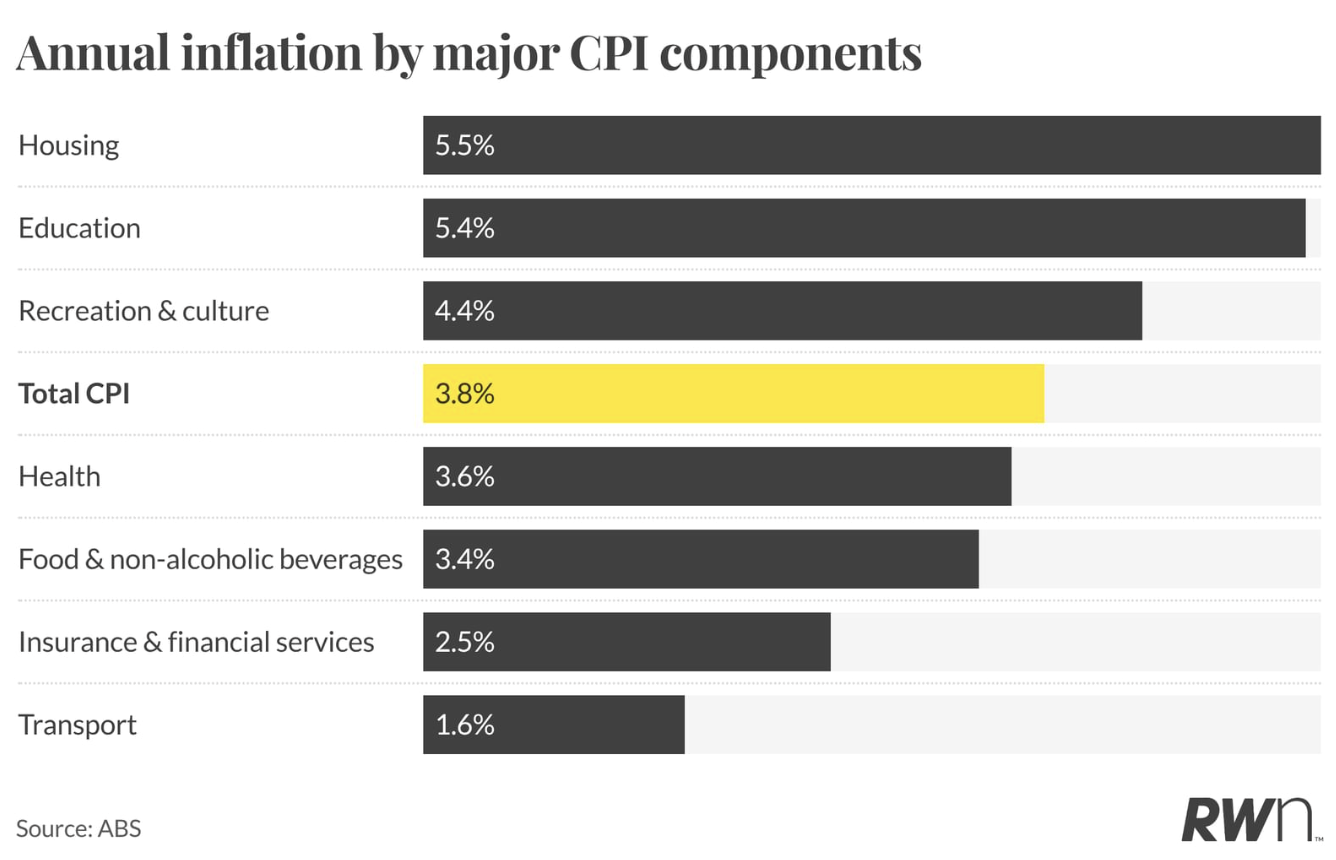
Meanwhile, annual headline inflation held steady at 2.4%, with price growth driven by housing, education and food. Services inflation – often stickier and slower to shift – eased from 4.3% to 3.7%, reflecting softer increases in rents and insurance. Goods inflation, however, ticked up slightly, largely due to higher electricity prices.  

Borrowers proving their resilience

Most home loan customers are in a stronger financial position than before the pandemic, according to the latest Financial Stability Review from the Reserve Bank of Australia (RBA).

“Although the share of households consistently drawing on their cash buffers has declined relative to 2023, it remains a bit above pre-pandemic levels. That said, all but the highest income quartile have larger prepayment buffers than before 2020 (see graph). Additionally, mortgagors’ equity positions are generally strong, with less than 1% of households currently in negative equity – a meaningful improvement from pre-pandemic levels,” the RBA said.

As a result, “the vast majority of borrowers would remain able to service their debt under a range of plausible economic scenarios”. Even if property prices declined by 30%, “around 9 in 10 mortgagors would still have positive equity”.

The RBA data confirms that the typical borrower has found a way to cope with higher interest rates and inflation over the past three years, and would manage even under more challenging circumstances.

Deposit struggle driving regional exodus

Australians are increasingly leaving the cities in search of more affordable housing, according to the new PEXA Buyer Deposits Report.

The report reveals that it can now take up to 20 years for a single-income buyer with no family support to save a deposit for a median-priced house in New South Wales – assuming consistent saving and no financial shocks.

In Victoria, the estimated range is nine to 17 years, while in Queensland, buyers may spend between 10 and 20 years building their deposit.

As a result, younger Australians are relocating to regional areas. For instance, the report highlights a consistent annual outflow of 20,000 to 30,000 people from Sydney to regional NSW. 

However, even these regional locations are now experiencing elevated loan-to-value ratios (LVR).

PEXA chief economist Julie Toth said this indicates that affordability issues are spreading beyond the cities.

“Regional towns show a high proportion of loans with LVRs above 80%, further stressing the difficulties faced by those trying to enter the market,” she said. 

Property price record + Rental growth slows + Wealth keeps rising

Australia’s median property price has climbed to a record $820,331, after rising 0.4% in March, according to Cotality (formerly CoreLogic).

“Improved sentiment following the February rate cut is likely the biggest driver of the turnaround in values, along with the cut’s direct influence of a slight improvement in borrowing capacity and mortgage serviceability,” said research director Tim Lawless.

“With the rate-cutting cycle expected to be drawn out, it will be interesting to see if this positive inflection in values can last in the face of affordability constraints.”

The national median price previously peaked in November 2024, after climbing for 22 consecutive months. It then fell slightly, but has now increased 0.7% over the past quarter.

Australia’s median price has jumped 68.3% over the past decade.

Rents hit record highs, but pace of growth slowing

The latest Domain data has painted a mixed picture of the rental market.

On the one hand, house rents (see graph) and unit rents ended the March quarter at record levels in every capital city. On the other hand, the pace of rental growth has slowed to a four-year low.

“Despite a softening of growth, the data suggests Australia is still very much a landlord’s market,” said Domain’s chief of research and economics, Nicola Powell.

“Most cities experienced 5% or less annual change, a sharp drop from the double-digit gains seen in recent years. Increasing supply is slowing price growth, and while it’s still not enough to fully meet demand – we can see that it’s helping to rebalance some of the tightest rental markets.

“The affordability ceiling is also becoming increasingly apparent, with unit rents outpacing house rents in Sydney, Melbourne, Brisbane, Canberra and Hobart this quarter.”

Besides affordability pressures, the slowdown in rental growth is being driven by an increase in the number of investors in the market (leading to an increase in the supply of rental properties) and a reduction in population growth (leading to a decrease in demand for those properties).

Wealth keeps rising

The average Australian was worth a record $618,000 at the end of 2024, based on the most recent wealth and population data from the Australian Bureau of Statistics.

The country’s net household wealth is calculated by adding up all our households assets (such as properties) and subtracting all our liabilities (such as home loans). You then divide that figure by the number of people to work out the net wealth of the average person.

A quarter of a century ago, the average Australian was worth $138,000. Since then, our net wealth has more than quadrupled due, in part, to an increase in property prices, the stock market and wages.

RBA cuts rates + Houses vs units + Broker market share keeps rising

The Reserve Bank of Australia (RBA) has cut the cash rate by 0.25 percentage points to 4.10% – its first rate reduction since November 2020 – offering some relief to mortgage holders.

The board said inflation had “fallen substantially” from its 2022 peak, with underlying inflation easing to 3.2% in the December quarter. Slower private demand and moderating wage pressures gave the RBA confidence inflation was tracking towards its 2-3% target.

But despite the rate cut, the RBA warned it isn’t necessarily the start of a broader easing cycle.

“Monetary policy has been restrictive and will remain so after this reduction in the cash rate,” it said in the post-meeting statement. The board highlighted lingering risks, including stronger-than-expected labour market data, which could slow inflation’s decline.

With global economic uncertainty and inflation still a concern, the RBA said future rate moves would depend on incoming data.

So, for now, borrowers get some relief, but the path ahead remains uncertain.

Units offer first home buyers a faster path to ownership

First home buyers looking for the fastest way into the market may want to consider a unit, with new Domain research finding it takes, on average, 20 months less to save for a unit deposit than a house.

Domain’s latest First Home Buyer report revealed that a typical 24–35 year-old couple, on average wages, now takes 3 years, 5 months to save a 20% deposit for an entry-priced unit across the combined capitals, compared to 5 years, 1 month for a house.

The gap is even wider in Sydney (2 years, 5 months faster) and Canberra (2 years, 4 months faster).

Brisbane, Adelaide and Perth were the only cities where saving times increased for both houses and units due to strong price growth outpacing wage growth.

Melbourne, on the other hand, was the only city where saving times for both property types have fallen over five years.

Domain chief of research and economics Dr Nicola Powell said affordability is worsening.

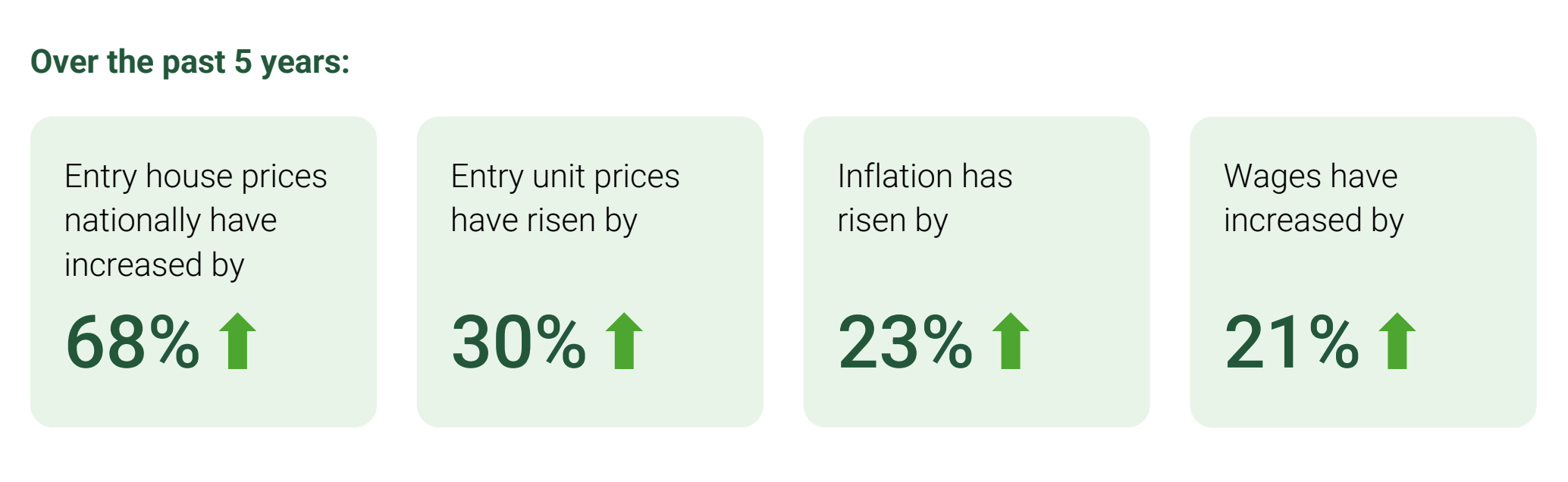
“In the past five years, entry house prices have increased 58%, while unit prices have risen by 27%. Meanwhile, inflation surged 20% and wages only grew by 15%” she said.

“This shows the growing gap between earnings and property costs, making it harder for first home buyers to get into the market.”

Brokers now handling 76% of new home loans

Mortgage brokers are more popular than ever, settling 76.0% of all new home loans in the December 2024 quarter, according to data from research group Comparator.

That’s up from 71.8% a year earlier and 6.7% higher than December 2022.

Brokers also facilitated $115.06 billion in new home loans – a 22% increase on the December 2023 quarter.

Mortgage and Finance Association of Australia |(MFAA) chief executive Anja Pannek said the surge reflected borrowers seeking expert guidance amid economic uncertainty and high interest rates.

“Brokers also assist clients to understand their financial position and get ‘finance ready’, prepare for lending approval, and navigate government schemes to achieve the goal of buying their first home. The breadth of assistance brokers offer is significant and valuable.”

More choice, better outcomes – that’s why brokers continue to dominate the home loan market.

Home loans reform + 7-point housing plan + Foreign buyer restrictions

The federal government has announced changes to how student loan debt is assessed in home loan applications, making it easier for some borrowers to qualify for a mortgage.

Currently, banks treat HECS-HELP debt like any other liability, factoring it into serviceability tests and debt-to-income ratios. This can reduce a borrower’s borrowing capacity, even though student loans don’t require repayment if the borrower earns below a certain threshold.

Under the new rules, lenders will be able to exclude HECS repayments from serviceability assessments if the borrower is close to paying off their debt. Excluding HECS from debt-to-income ratios will also allow some home buyers to borrow more.

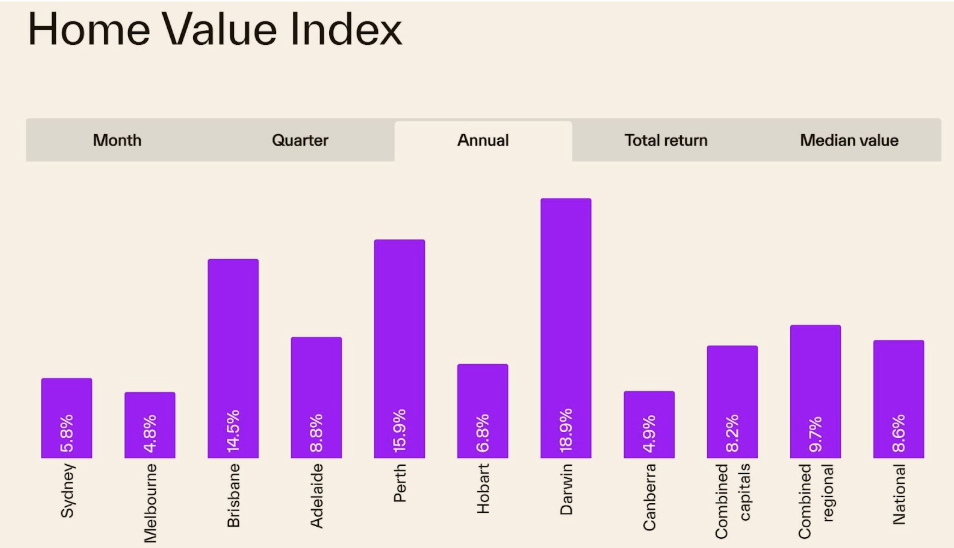
CoreLogic’s latest home value index shows the national median price rose 4.3% in January when compared to a year ago (see image).

With affordability pressures making it harder to enter the property market, these adjustments aim to remove unnecessary barriers for first home buyers.

REIA’s plan to fix Australia’s housing crisis

The Real Estate Institute of Australia (REIA) is calling for urgent housing reforms ahead of the 2025 Federal Election.

Key elements of REIA’s 7-point plan include:

Fast-tracking the delivery of 1.2 million homes under the National Housing Accord, including initiatives to encourage older Australians to downsize, freeing up larger family homes for younger buyers.

Expanding first-home buyer deposit assistance schemes and revising APRA’s lending criteria to make homeownership more accessible for young Australians and key workers.

Supporting the expansion of Build-to-Rent developments to boost long-term rental housing supply.

Maintaining negative gearing & capital gains tax exemptions to encourage property investment and stabilise rental supply.

Phasing out stamp duty to reduce upfront costs and improve housing accessibility.

Reducing regulatory burdens for small real estate businesses to foster industry growth.

Strengthening the workforce by including real estate roles in skilled occupation lists.

REIA President Leanne Pilkington said the plan comes at a time when housing affordability is at its lowest level since 1996 (see graph).

“With mortgage repayments consuming a significant portion of household income and rental stress rising, REIA’s strategy aims to address these issues head-on,” she said.

New restrictions for foreign property investors

The federal government is banning foreign investors from buying existing homes for two years, in a move aimed at tackling Australia’s housing affordability crisis.

From 1 April 2025 to 31 March 31 2027, foreign buyers – including international students and foreign-owned companies – won’t be able to purchase established dwellings. However, they’ll still be able to buy new homes, in a bid to boost supply.

Housing Minister Clare O’Neil said the move would “free up thousands of properties for Australians”.

However, with foreign investors accounting for only a small slice of the market, the impact is expected to be limited.

The most recent Australian Taxation Office data shows foreign buyers made just 5,360 residential property purchases in 2022-23, with only a third involving existing homes. That’s a drop in the ocean compared to the 670,000 property transactions that happen in an average year.

Property prices fall + RBA hints at rate cut + Housing preferences changing

Australian property prices fell 0.1% in December, marking the first decline in nearly two years, according to CoreLogic.

This followed a flat result in November, marking a slowdown after a resilient growth streak.

CoreLogic’s research director, Tim Lawless, said the decline was expected.

“This result represents the housing market catching up with the reality of market dynamics,” he said.

“Growth in housing values has been consistently weakening through the second half of the year, as affordability constraints weighed on buyer demand and advertised supply levels trended higher.”

Despite the December dip, national home values rose 4.9% in 2024, adding $38,000 to the median home value.

Perth, Adelaide, and Brisbane led the way, with annual growth of 19.1%, 13.1%, and 11.2%, respectively. Sydney and Darwin saw more modest gains of 2.3% and 0.8%, while Melbourne (-3.0%) and Hobart (-0.6%) recorded declines.

RBA minutes hint at potential rate cut in early 2025

The Reserve Bank of Australia’s December meeting minutes suggest the first rate cut may arrive sooner than previously thought.

While the RBA kept the cash rate steady at 4.35%, the board noted that annual wage growth was softening faster than anticipated after it dropped to 3.5% in the September quarter from 4.1% in June (see graph).

Also, private sector hiring intentions remain below average, signalling reduced demand in the labour market.

This data has shifted the tone, with the board expressing increased confidence in inflation easing towards the target range of between 2-3%.

However, the RBA emphasised it won’t rush into rate cuts, noting it will assess key data in January, including inflation on the 29th and unemployment on the 16th.

“If the future flow of data continued to evolve in line with, or weaker than, their expectations, it would further increase their confidence that inflation was declining sustainably towards target. If that were to occur, members concluded that it would, in due course, be appropriate to begin relaxing the degree of monetary policy tightness,” the minutes said.

Smaller households equal bigger housing challenges

Australia’s shrinking household size is quietly adding pressure to the housing crisis.

Australian Bureau of Statistics data shows that in the mid-1980s, the average Australian household included 2.8 people. Today, it’s 2.5.

While this drop might seem small, it equates to the need for an additional 1.2 million homes – matching the federal government’s five-year housing target.

The pandemic accelerated this trend, as many sought more space, but hopes for a post-pandemic reversal have yet to materialise.

Nenad Petrovic, demographic consultant at id (informed decisions), says reversing this decline would require significant demographic shifts.

“To increase average household size, we’d need to see a reversal in the demographic trends that have led to its decline, including low fertility rates (resulting in fewer children per household) and an aging population that results in more older people living alone. In 2021, there were approximately a quarter of a million more older lone person households than ten years earlier in 2011,” he said.