Property prices fall + RBA hints at rate cut + Housing preferences changing

Australian property prices fell 0.1% in December, marking the first decline in nearly two years, according to CoreLogic.

This followed a flat result in November, marking a slowdown after a resilient growth streak.

CoreLogic’s research director, Tim Lawless, said the decline was expected.

“This result represents the housing market catching up with the reality of market dynamics,” he said.

“Growth in housing values has been consistently weakening through the second half of the year, as affordability constraints weighed on buyer demand and advertised supply levels trended higher.”

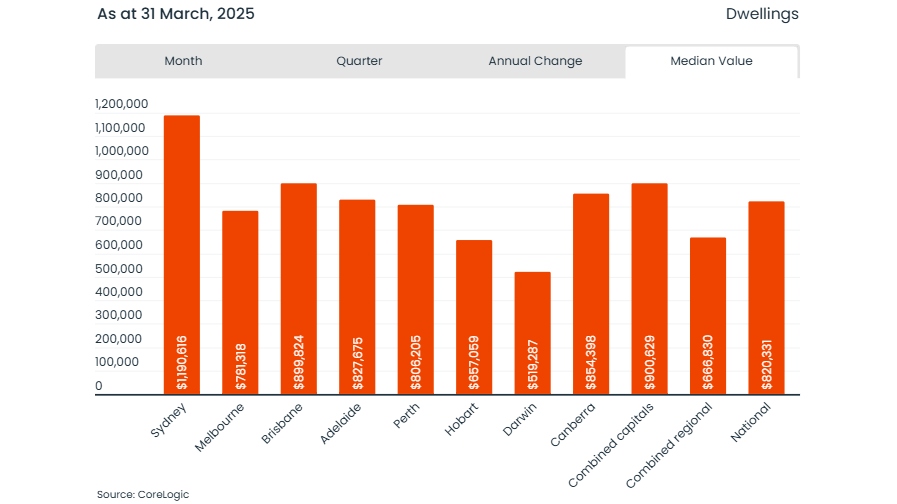
Despite the December dip, national home values rose 4.9% in 2024, adding $38,000 to the median home value.

Perth, Adelaide, and Brisbane led the way, with annual growth of 19.1%, 13.1%, and 11.2%, respectively. Sydney and Darwin saw more modest gains of 2.3% and 0.8%, while Melbourne (-3.0%) and Hobart (-0.6%) recorded declines.

RBA minutes hint at potential rate cut in early 2025

The Reserve Bank of Australia’s December meeting minutes suggest the first rate cut may arrive sooner than previously thought.

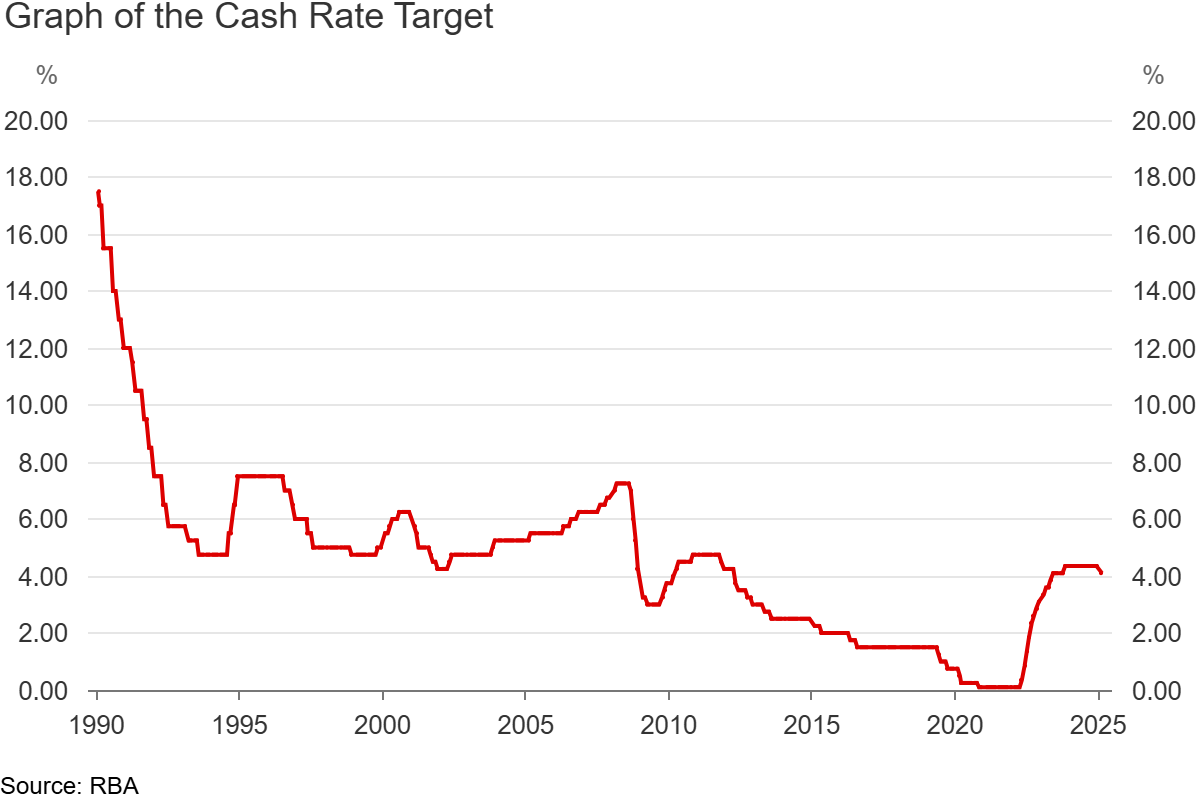
While the RBA kept the cash rate steady at 4.35%, the board noted that annual wage growth was softening faster than anticipated after it dropped to 3.5% in the September quarter from 4.1% in June (see graph).

Also, private sector hiring intentions remain below average, signalling reduced demand in the labour market.

This data has shifted the tone, with the board expressing increased confidence in inflation easing towards the target range of between 2-3%.

However, the RBA emphasised it won’t rush into rate cuts, noting it will assess key data in January, including inflation on the 29th and unemployment on the 16th.

“If the future flow of data continued to evolve in line with, or weaker than, their expectations, it would further increase their confidence that inflation was declining sustainably towards target. If that were to occur, members concluded that it would, in due course, be appropriate to begin relaxing the degree of monetary policy tightness,” the minutes said.

Smaller households equal bigger housing challenges

Australia’s shrinking household size is quietly adding pressure to the housing crisis.

Australian Bureau of Statistics data shows that in the mid-1980s, the average Australian household included 2.8 people. Today, it’s 2.5.

While this drop might seem small, it equates to the need for an additional 1.2 million homes – matching the federal government’s five-year housing target.

The pandemic accelerated this trend, as many sought more space, but hopes for a post-pandemic reversal have yet to materialise.

Nenad Petrovic, demographic consultant at id (informed decisions), says reversing this decline would require significant demographic shifts.

“To increase average household size, we’d need to see a reversal in the demographic trends that have led to its decline, including low fertility rates (resulting in fewer children per household) and an aging population that results in more older people living alone. In 2021, there were approximately a quarter of a million more older lone person households than ten years earlier in 2011,” he said.

Property price predictions + Inflation concerns + Brokers set record

Australia’s property markets could face a mixed year ahead, according to SQM Research managing director Louis Christopher’s latest Housing Boom and Bust Report.

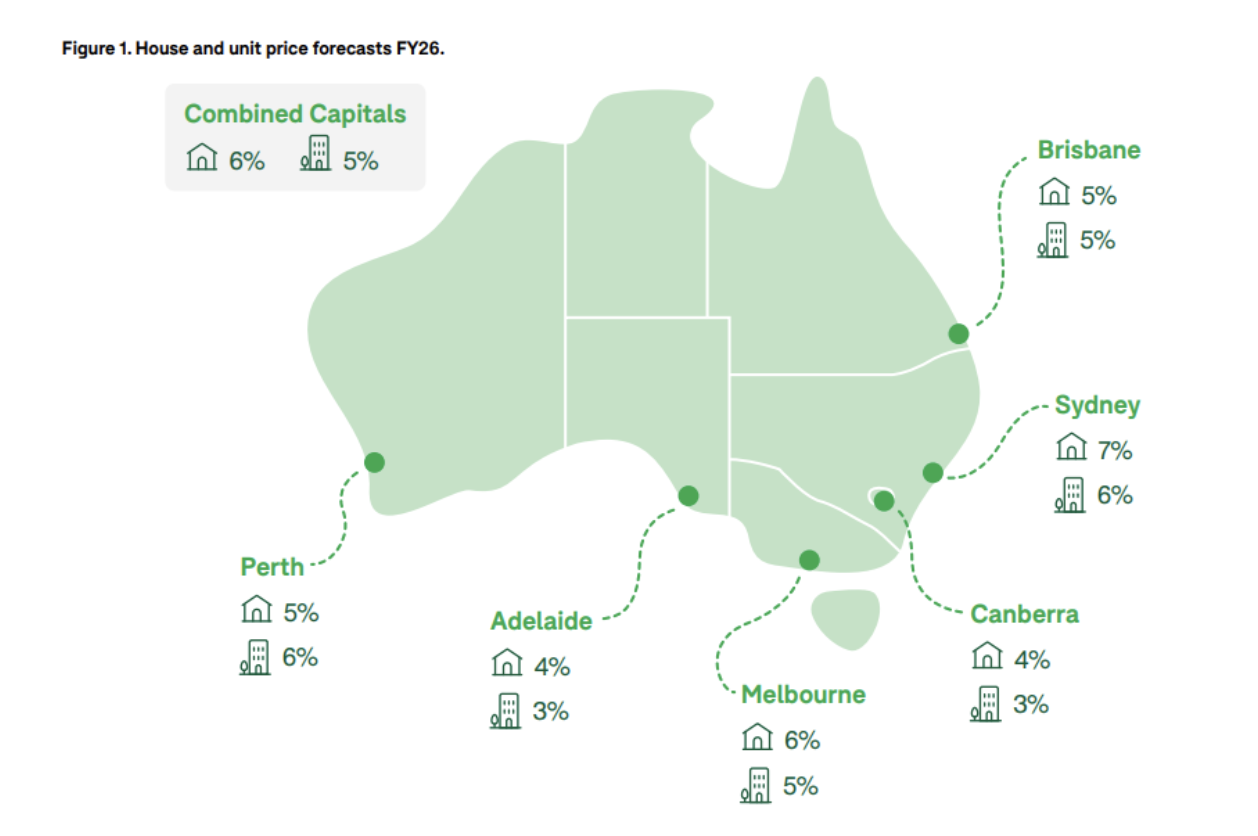
In his base case scenario, national dwelling prices are forecast to rise by up to 4%. However, there are significant variations across the capital cities with Perth expected to outshine its counterparts with potential price growth of up to 19%. Brisbane, Adelaide and Darwin are also predicted to outperform the national average.

Meanwhile, Sydney and Melbourne could see moderate declines of -5% to -1%, while Canberra faces the steepest falls of -6% to -2%.

The forecast hinges on key factors, including a predicted interest rate cut of 0.25% to 0.50% in mid-2025, population growth of over 500,000 and no new inflationary outbreaks.

In a more optimistic scenario, an early rate cut in February could drive national price growth of up to 10%, with Perth surging 15-20% and Sydney and Melbourne recording growth of up to 7% and 6%, respectively.

More pessimistically, if rate cuts fail to materialise and population growth slows (scenario 4), Mr Christopher believes dwelling values could decline by up to 4% nationally, with Sydney and Melbourne hardest hit.

RBA remains concerned about inflation

In disappointing news for anyone hoping for imminent interest rate cuts, the Reserve Bank of Australia (RBA) has forecast that inflation will rise in the second half of next year.

The RBA has been using higher interest rates to slow the economy and thereby reduce the inflation rate to within its target range of 2-3%. Although inflation recently fell to 2.8%, the RBA has made clear that interest rates will need to be “sufficiently restrictive” until it is confident that inflation is “moving sustainably” towards its target range.

New RBA forecasts suggest inflation will fall to 2.5% by the end of this year, “owing primarily to cost-of-living support measures provided to households”, but then rise to 3.7% by December 2025, because energy rebates are scheduled to be withdrawn at the end of June 2025.

Furthermore, the RBA’s forecasts “do not see inflation returning sustainably to the midpoint of the target until 2026”.

Based on those forecasts, the RBA may feel it needs to keep interest rates higher for longer – which, in turn, means it might be some time before mortgage rates start falling.

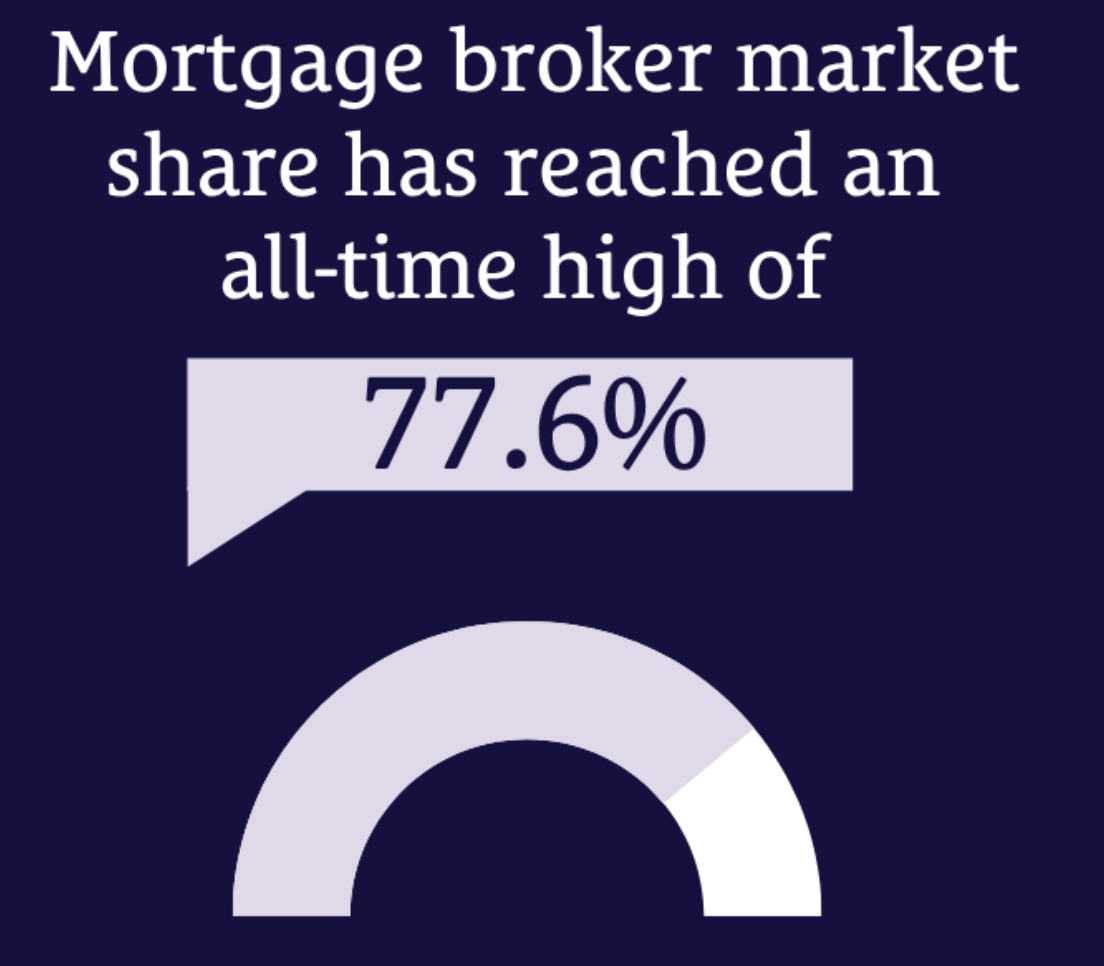
Broker market share hits record 74.6%

Home loan customers are turning to mortgage brokers in record numbers, according to new data from Comparator, which was commissioned by the Mortgage & Finance Association of Australia (MFAA).

Brokers originated a record 74.6% of all new home loans in the September quarter, compared to 25.4% by banks and other lenders.

“This result continues to highlight that mortgage brokers are the preferred choice for borrowers navigating today’s complex lending environment,” said MFAA CEO Anja Pannek.

“It’s about much more than securing an interest rate. Mortgage brokers are bound by the Best Interests Duty and provide a wealth of value to their clients. They help borrowers understand their financial options, identify opportunities to adjust household budgets and work tirelessly to find tailored solutions.”

10 Tips On Managing Your Mortgage With Increased Interest Rates

Let’s face it, managing your mortgage in Australia with increased interest rates isn’t easy. The combination of rising interest rates and creeping inflation has made life more difficult for many Australians. Thankfully, there are ways to manage your mortgage so that you can continue to live comfortably while staying within your budget.

5 Financial Mistakes Most First-Time Homeowners Make

Congratulations! You have just bought your first home. You’ve got the keys to your new abode, maybe you even found a renter for your old place, and now you’re ready to get down to the business of decorating and settling in. But before you do that, there are some financial considerations you should take care of right away—and that means not making these common mistakes as a first-time homeowner

Five Common Pitfalls Of Home Ownership

Owning a home is a long-term investment that can help you build wealth and achieve financial independence. However, it’s not without its pitfalls. Here are five common pitfalls that homeowners face