Listings rise + Prices fall + Property vs shares

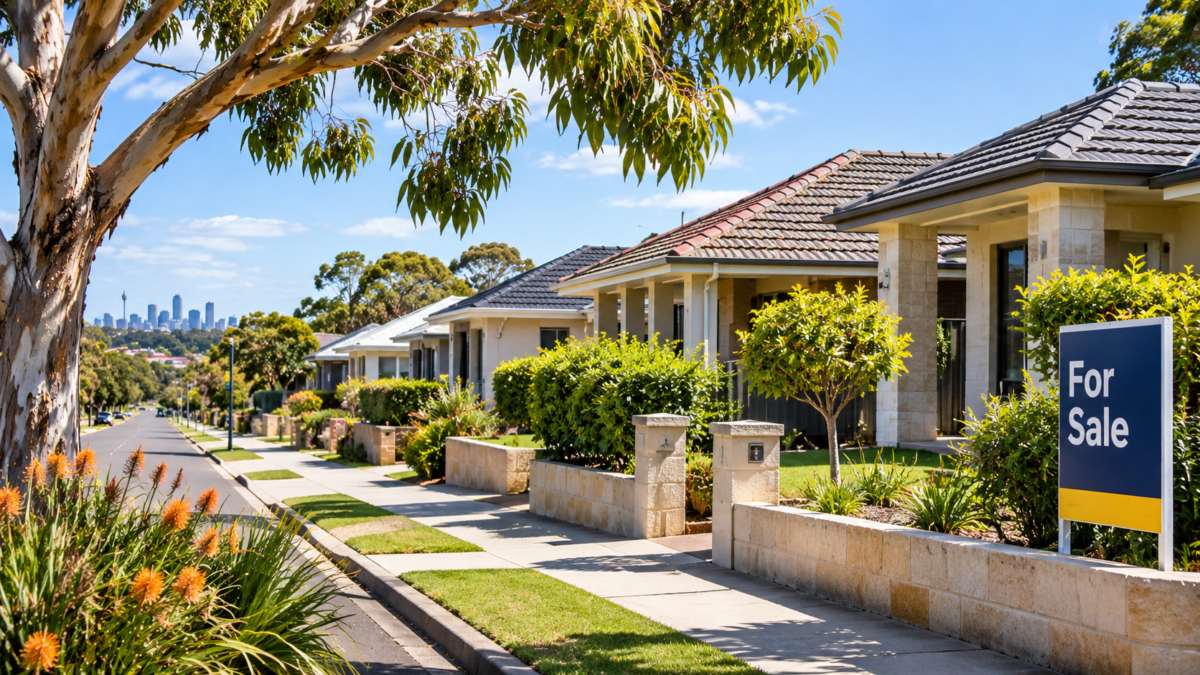
Australian property buyers now have more choice than they’ve had in over five years, according to SQM Research.
The number of properties listed for sale nationally reached 301,201 in October, up 8.8% month-on-month and 19.3% year-on-year.
However, this increase isn’t being driven primarily by new properties coming onto the market. Rather, existing properties are taking longer to sell.
The number of new listings (those less than 30 days old) actually fell 1.2% year-on-year.
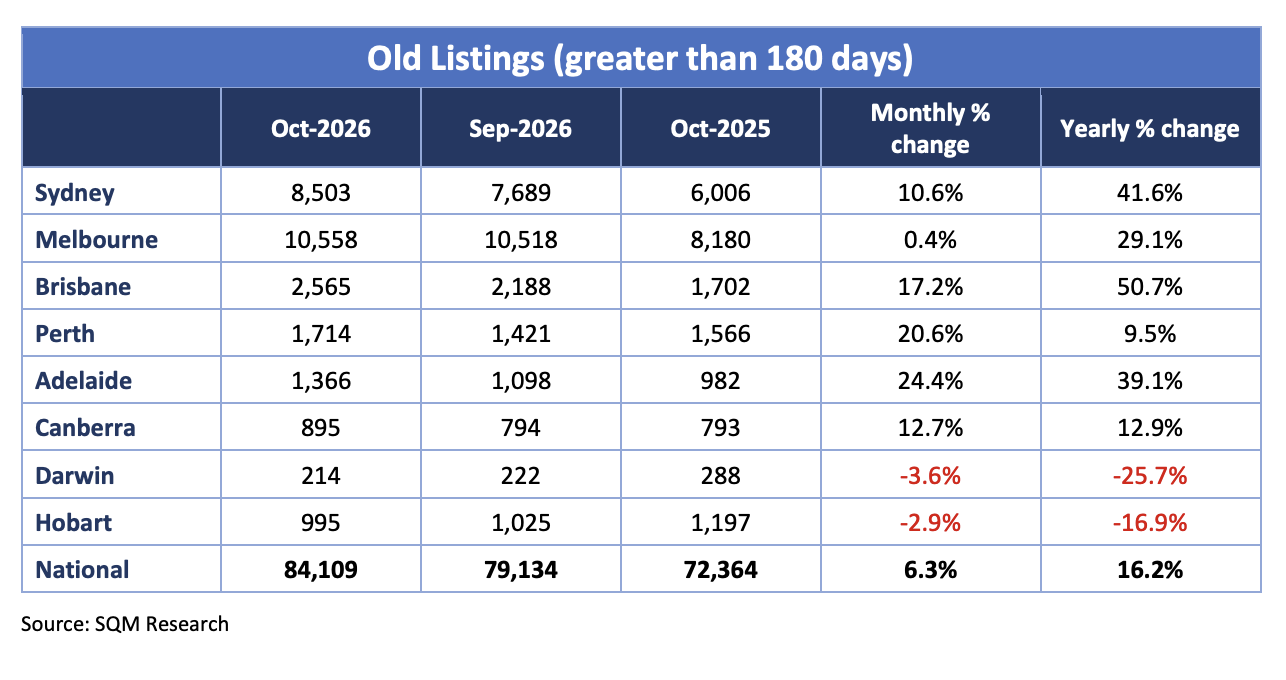
Meanwhile, the number of properties that had been on the market for between 30 and 180 days jumped 41.1%, while listings older than 180 days increased 16.2% (see graph below).
This suggests buyer demand is struggling to keep pace with the number of properties available for sale.
For buyers, that could mean more choice, less competition and greater negotiating power.
Property prices fall 1.2% in October
Australia’s median property price fell 1.2% in October, marking the seventh consecutive month of declining values, according to Cotality.
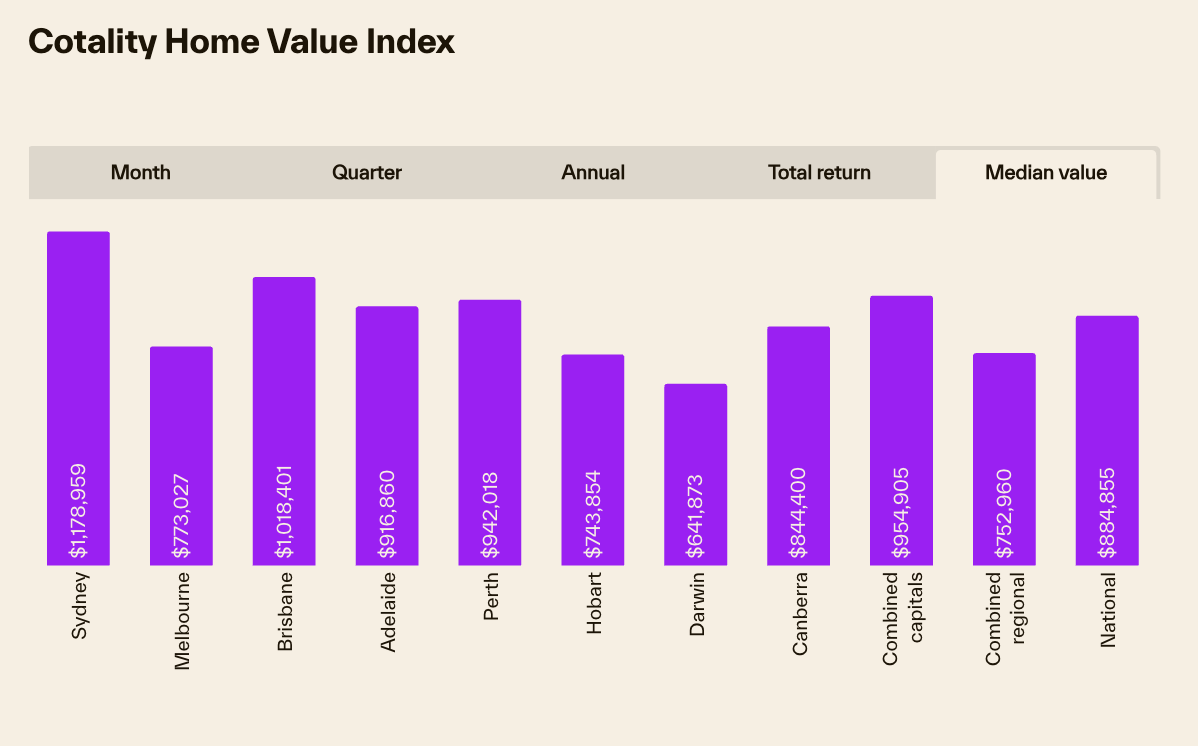
National home values are now 6.7% below their March peak, equivalent to a reduction of approximately $63,400 in the value of the median dwelling.
Brisbane (-2.0%) and Perth (-1.7%) recorded the largest monthly declines, followed by Sydney (-1.6%).
However, Cotality’s research director, Tim Lawless, said that while the mid-sized capitals are now experiencing a correction following six years of extraordinary price growth, most homeowners in these cities are likely to have significant equity buffers.
For example, Perth property values could fall 20% from their record high and would only return to levels recorded around the middle of 2025.
That highlights just how much these markets have grown in recent years.
Property vs shares: which has performed better?
Property and shares are two of Australia’s most popular investment options. But which has delivered stronger capital growth over the past decade?
According to PRD’s latest Australian Economic & Property Report, residential property comes out ahead.
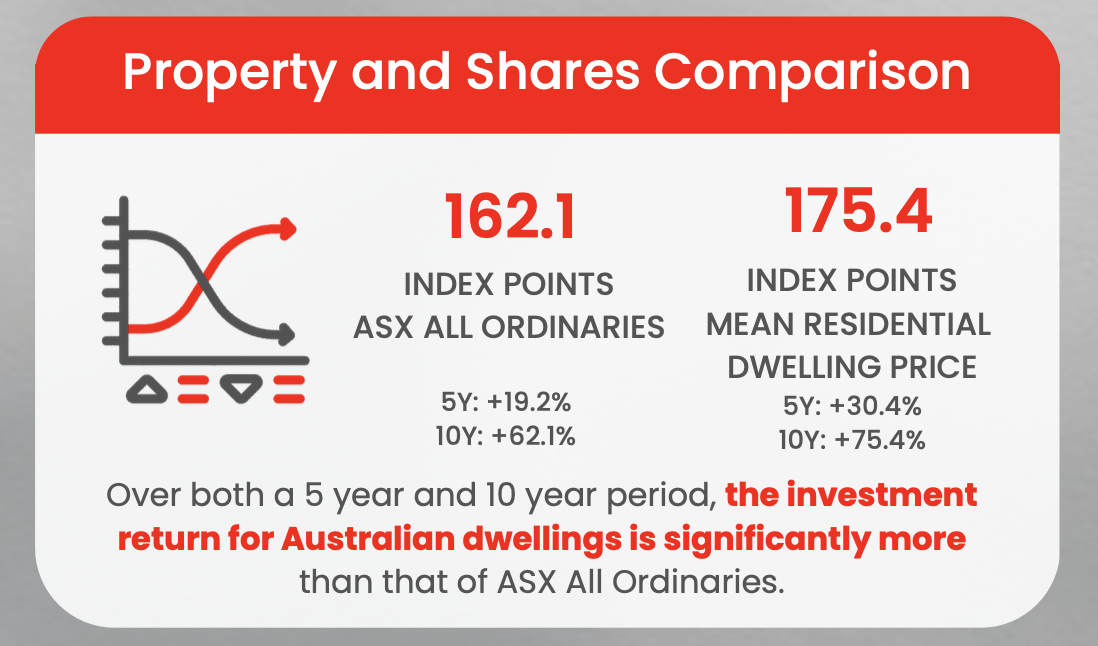
Over the ten-year period examined in the report, Australia’s mean residential dwelling price increased 75.4%, compared with a 62.1% rise in the ASX All Ordinaries index.
The results were similar over the shorter five-year period, with property values increasing 30.4% compared with 19.2% for shares.
Importantly, these figures don’t include rental income or share dividends, so they aren’t a direct comparison of total investment returns.
Nevertheless, they demonstrate that Australian property has delivered strong capital growth over an extended period, despite fluctuations in interest rates, economic conditions and buyer demand.
It’s another reminder of why taking a long-term view can be valuable when investing in property.